A founder's case study
2016-2020
Creating a "Netflix of Reading" for ‘Bharat’. And why it failed.
Background
While designing buildings and townships for over 3 years i realized the power of storytelling. To be honest, as an architect how i present my building design to clients was the core skill that helped me succeed.
For next 2 years, while still working as an architect; i started exploring other storytelling formats like videos, animation, motion graphics and interactive web experiences.
Started attending startup events in Delhi and Gurgaon, interacting with startup founders and most importantly started learning about technology, entrepreneurship, pitch decks etc.
I wanted now to create a platform for meaningful content. My first inspiration was something like national geographic for India. Then there was motion comics idea to convert knowledge into fun comics.
I started making motion comics on youtube using Sketchup and imovie as my tool. Then i tried building a motion comics platform where people can build motion comics. Failed terribly as my tech knowledge was limited and no-code tools weren't great those days. Tried PandaSuite and FlutterFlow for a while.
Finally i decided to smart simple and started a linkedin and facebook page to post knowledgeable content in a fun way. The desire to create something that can scale and become a platform was rising. I finally decided to take the leap of faith.
My roommate Gaurav, who was also my teammate in office was observing me all this time experimenting and doing things. He liked the idea and decided to join me on this wild quest into a space we both knew very less about.
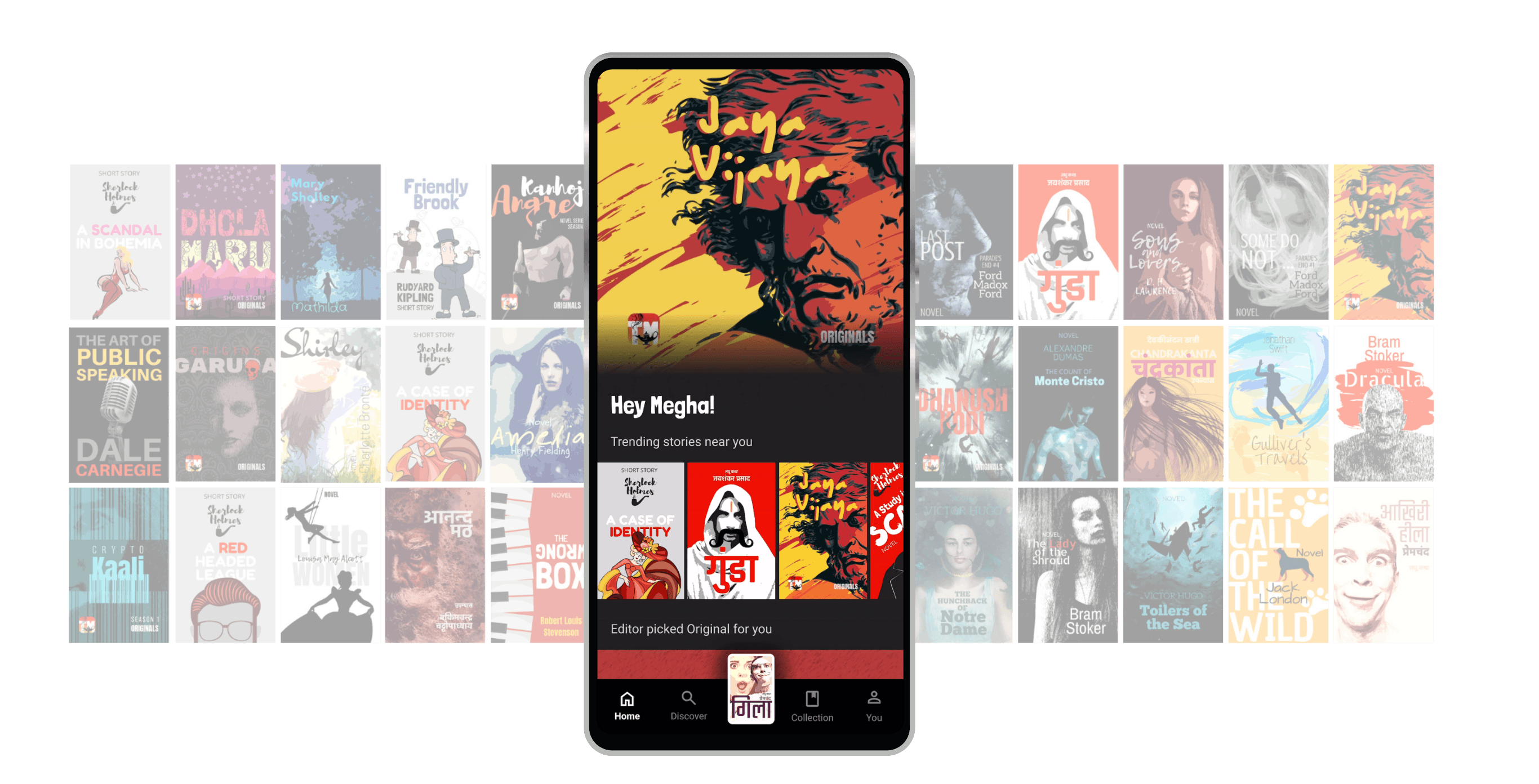
In 2016, I co-founded TaccoMacco with Gaurav to share Indian stories. By 2017, we pivoted to a mobile-first platform for short stories, novels, and comics, empowering self-publishing and catering to vernacular India (Bharat).
And by 2020 we failed, we were broke and penniless. :)
Note: This case study focuses on the mobile platform, reflecting the research and market needs of 2015-16.
Purpose
Our vision aimed to promote Indian storytelling in English and other languages to connect the new generation with the sub-continent's heritage and values.
| Curate and elevate self-published material to a quality that is worth paying for.
| Find ways to to make it affordable to the masses.
Business need: Develop a pipeline for consistent quality content by promoting Indian new authors through editorial support, writing assistance, and platform promotions.
The Opportunity
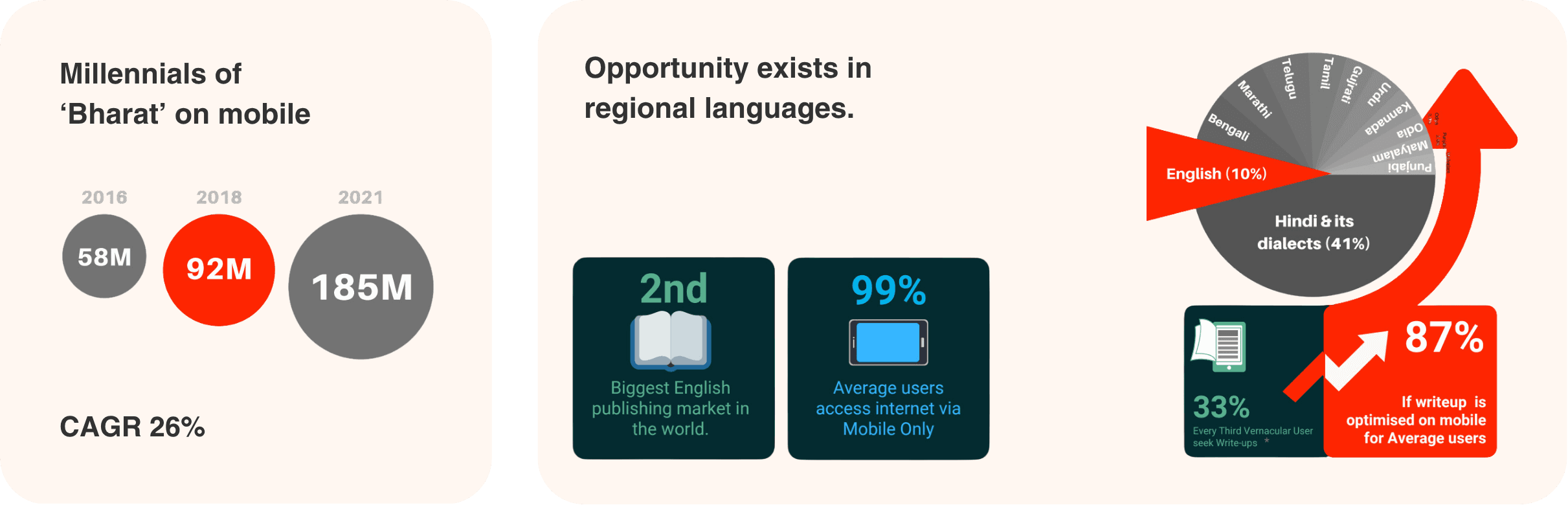
92M impulsive and young, vernacular mobile users seek write-ups, but refined and curated reads are inaccessible in simple and financially sustainable way.
-A study by KPMG in India and Google, April 2017
Why this was the right time
In 2016-17, mobile internet penetration surged in rural and semi-urban India, creating lucrative opportunities.
| Affordable data:
Jio expanded internet access to rural and semi urban areas by offering free voice calls and affordable 4G data plans.
| Affordable smartphone:
Indian brands like Micromax, Lava, and Intex offer affordable smartphones for budget-conscious rural and semi-urban consumers.
| Digital payment:
UPI was still gaining popularity, but by 2016 Paytm effectively entered rural and semi-urban areas with its wallet. For online shopping majorly COD worked. By 2018 digital payment platforms like Paytm, Phone Pe, Google pay and BHIM UPI gained popularity.
| Youtube rising:
Content creators in smaller towns and rural areas made youtube their medium

The MVP target audience
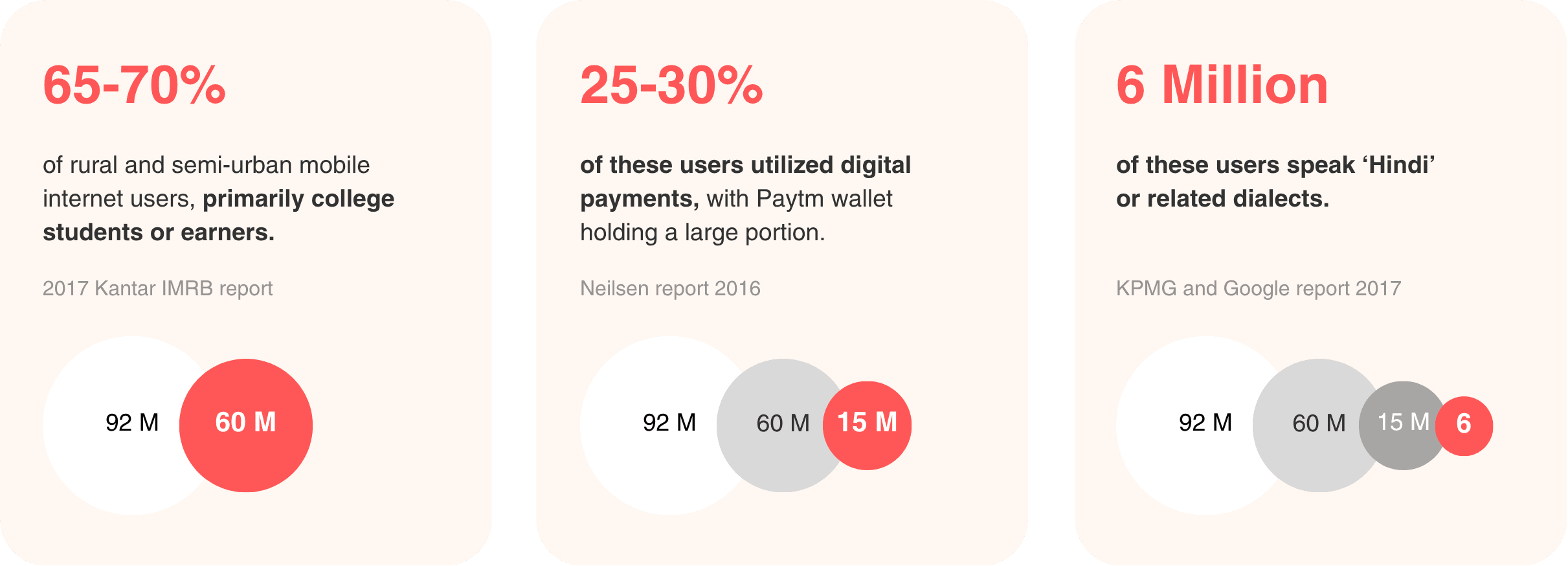
We focused on users aged 18 to 30 (Millennials) in rural and semi-urban areas. As a small startup in content generation, we chose to start with one language and plan to scale later. This user group forms:
User study
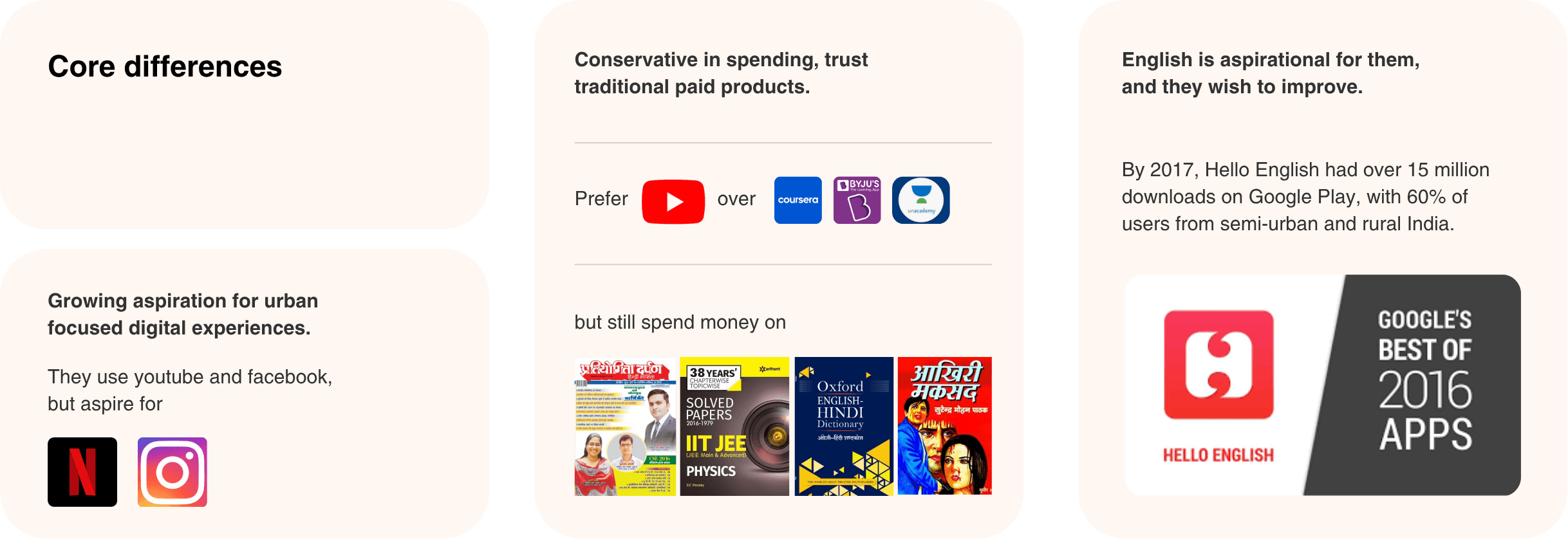
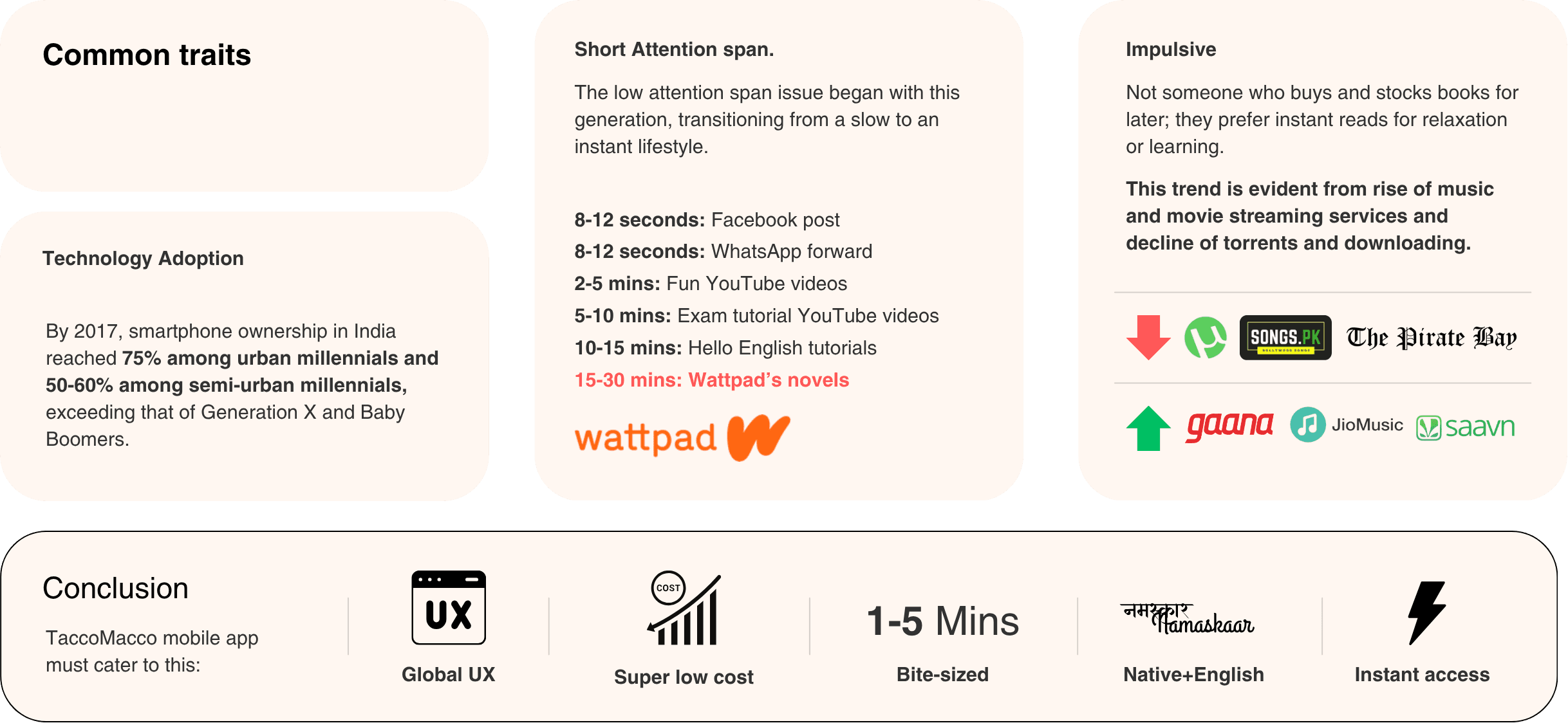
In 2016 India, semi-urabn or rural millennials shared core traits same as urban counterparts but exhibited distinct differences in lifestyles, resource access, and social environments, shaping their behaviors and priorities.
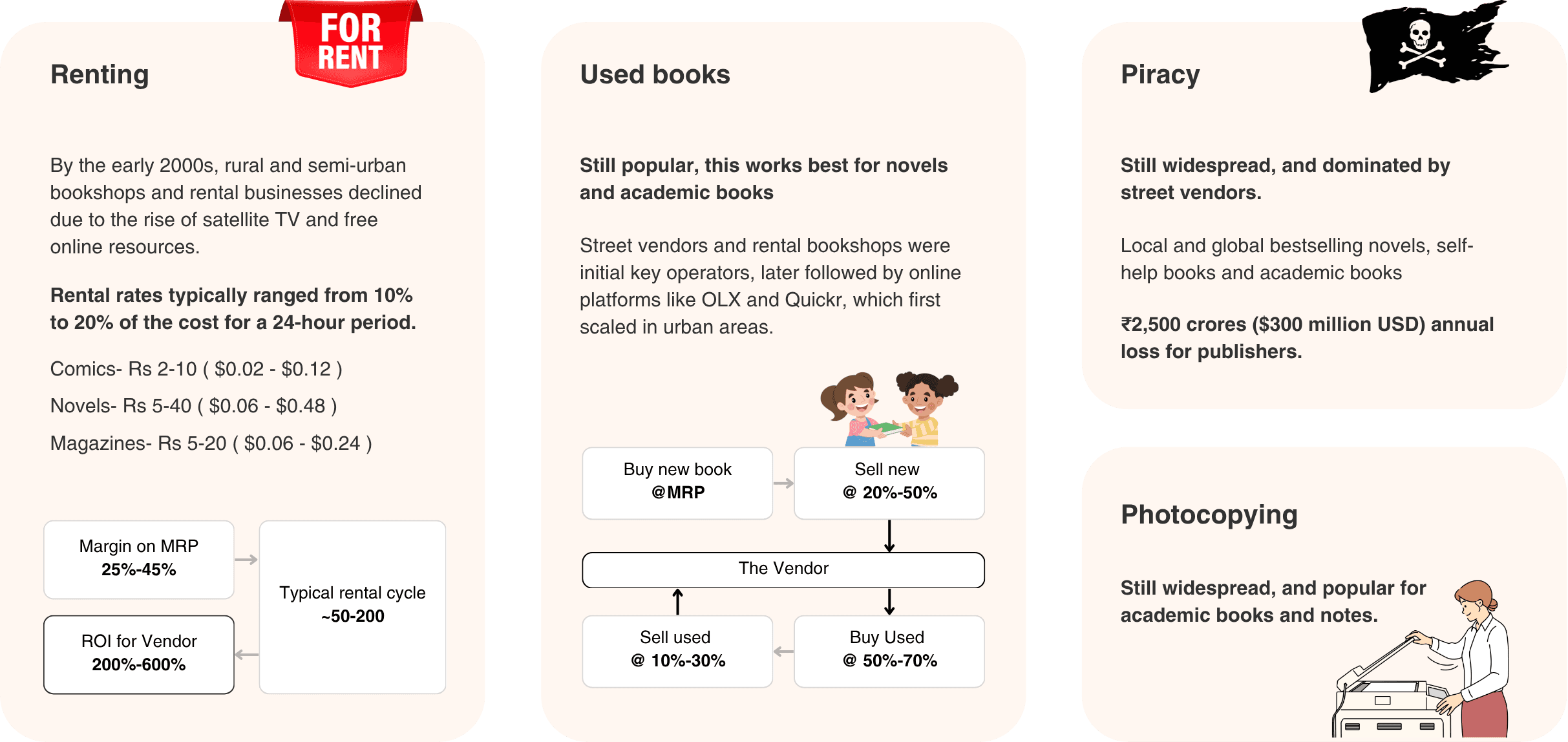
How our target users access books
Users accessed books through a mix of low-cost rentals, second-hand resale loops, and informal channels like piracy and photocopying – optimizing for affordability over ownership.
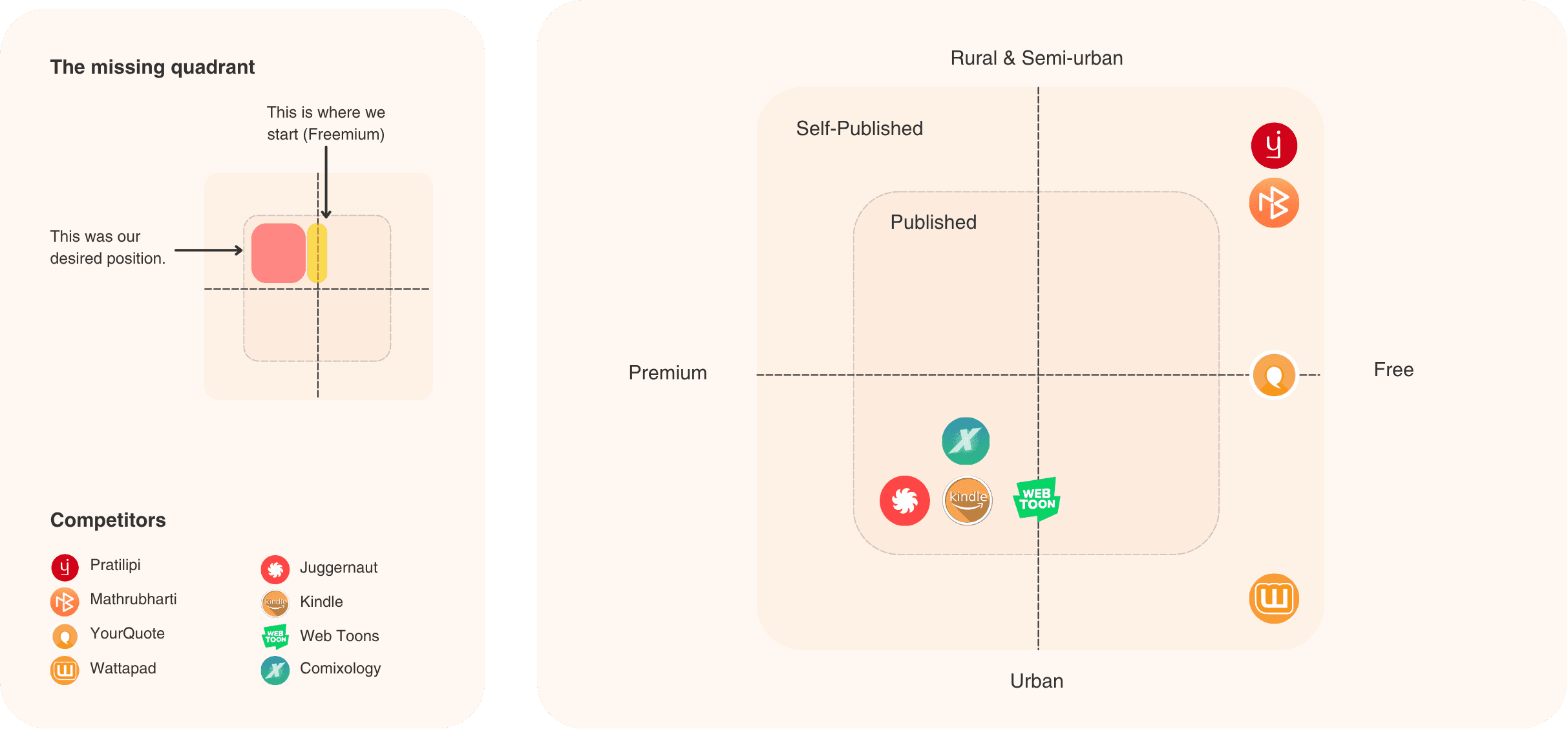
Competitive landscape 2017 (India)
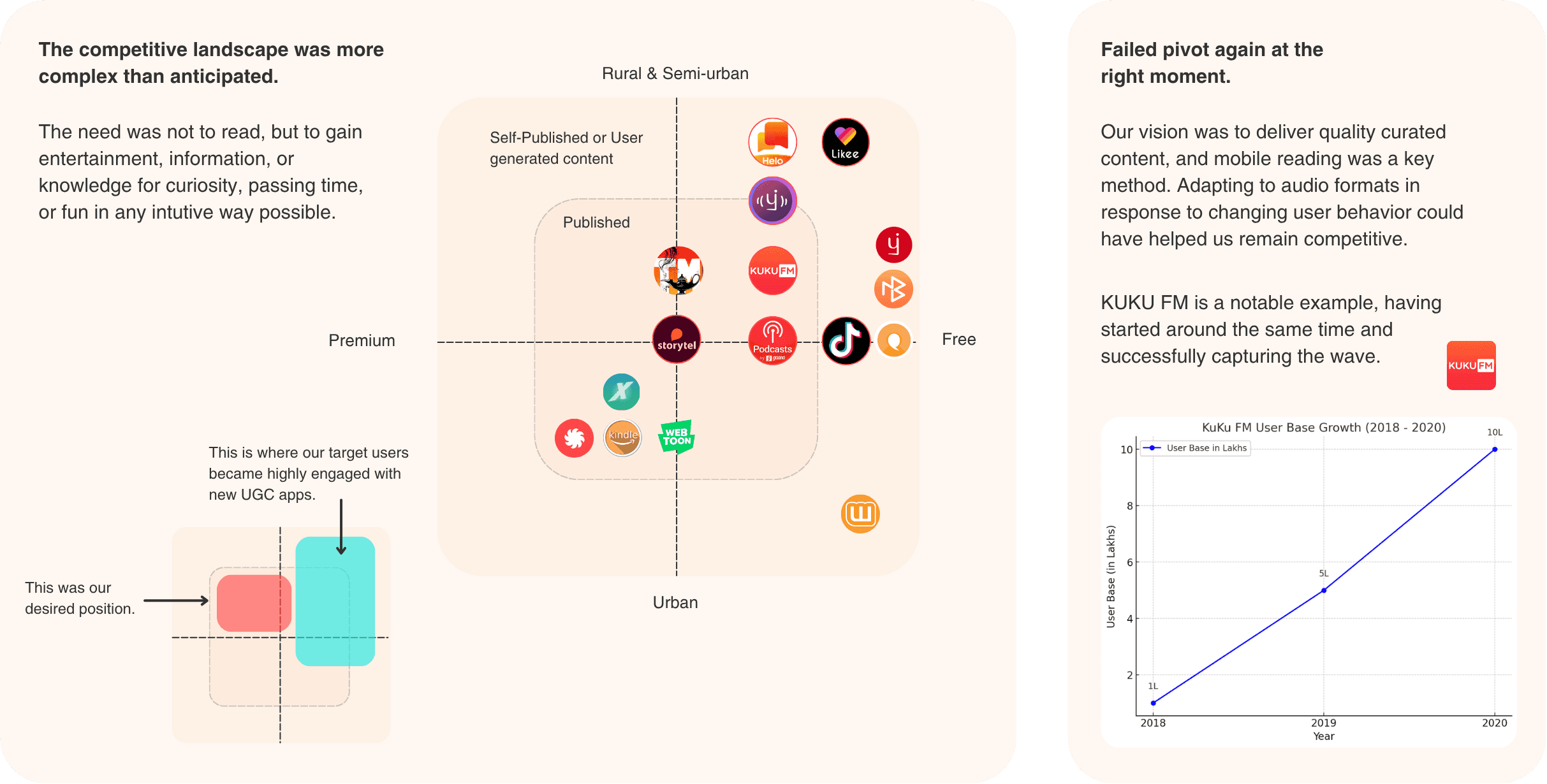
The market is crowded around urban, premium, and published content – while free, vernacular-first experiences in semi-urban/rural segments remain under built.
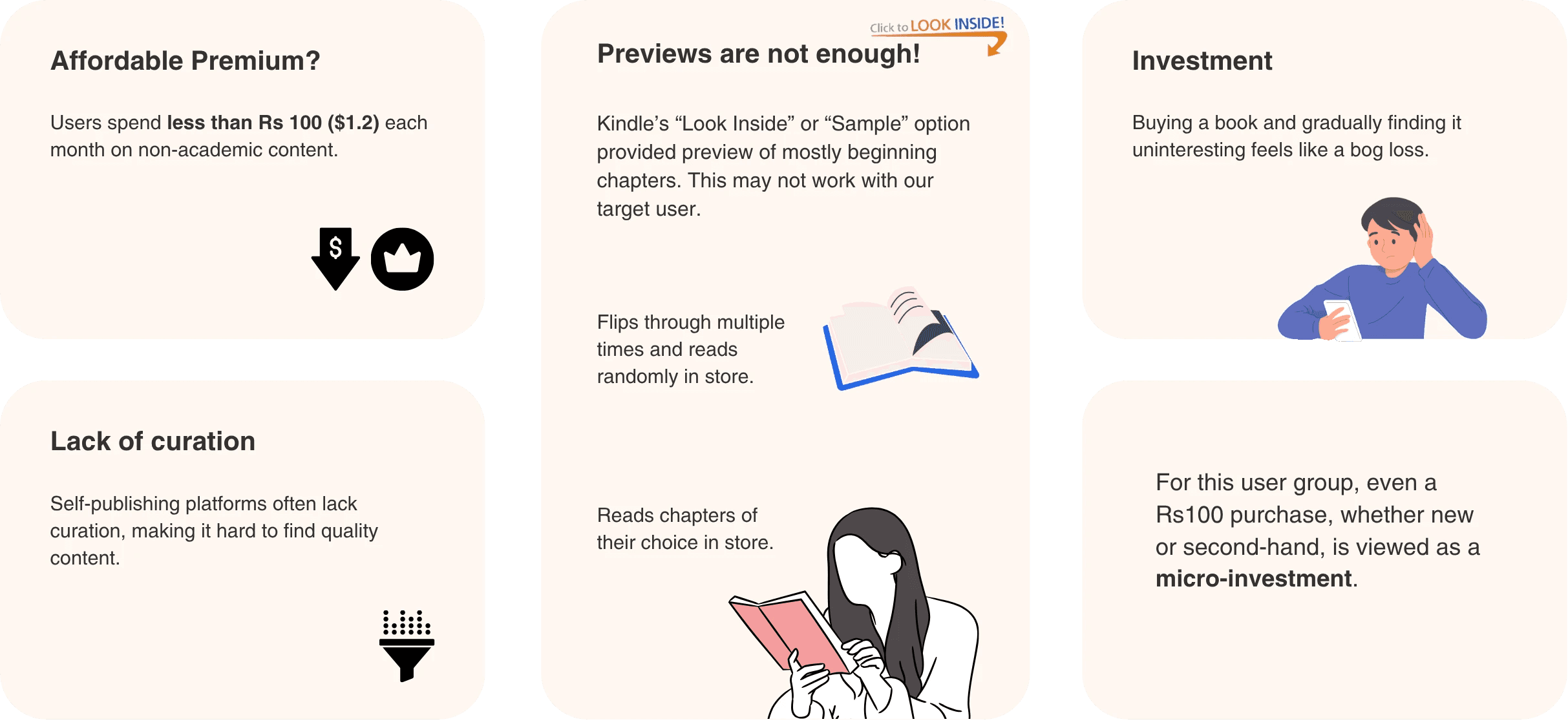
The Problem
Users treat even small book purchases as risky micro-investments – so they seek flexible sampling, low commitment, and trusted curation before paying.
The Inspiration
Neighborhood book rental vendors. Users in the rental era comfortably took risks by renting multiple books at low costs to explore at home. Users had willingness to explore premium new or unknown titles/authors for a negligible cost.
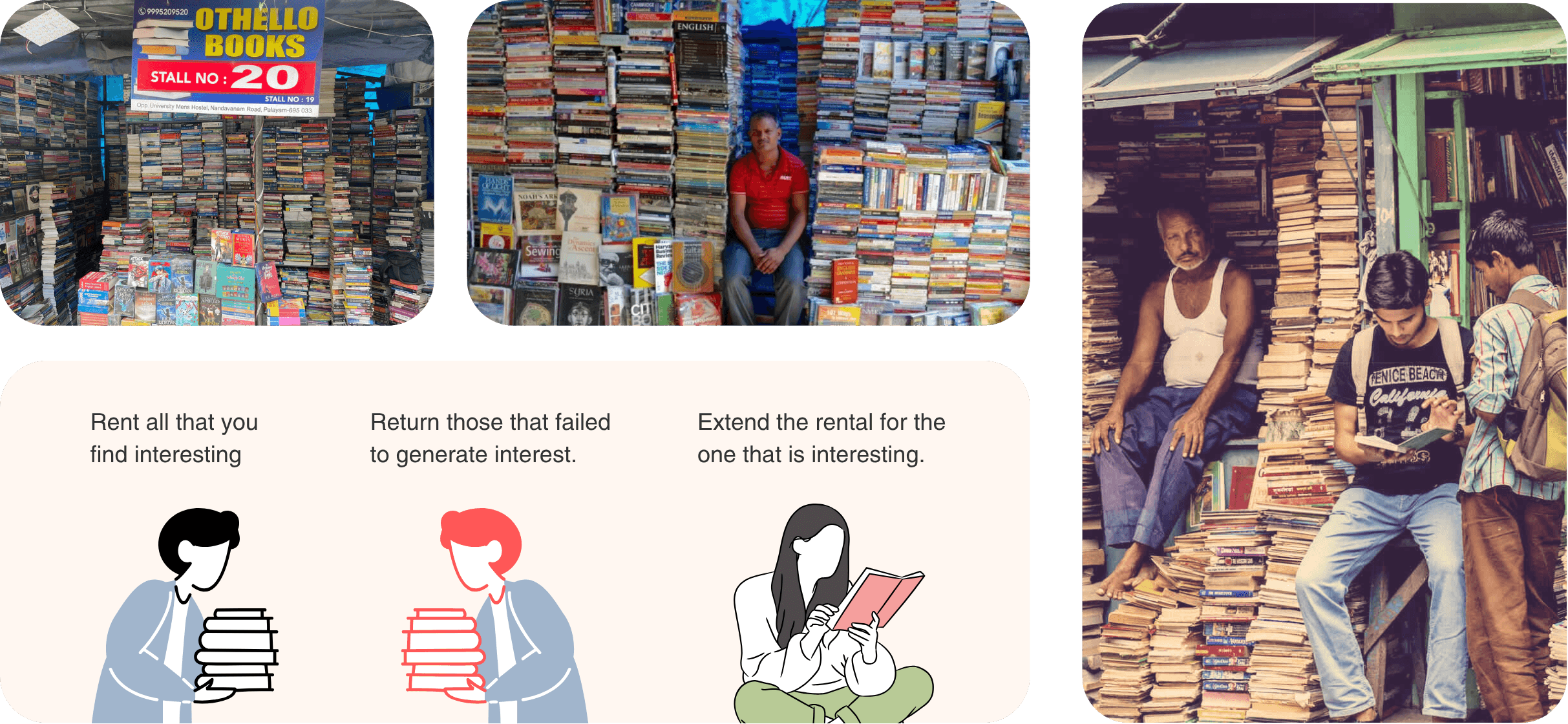
The Idea
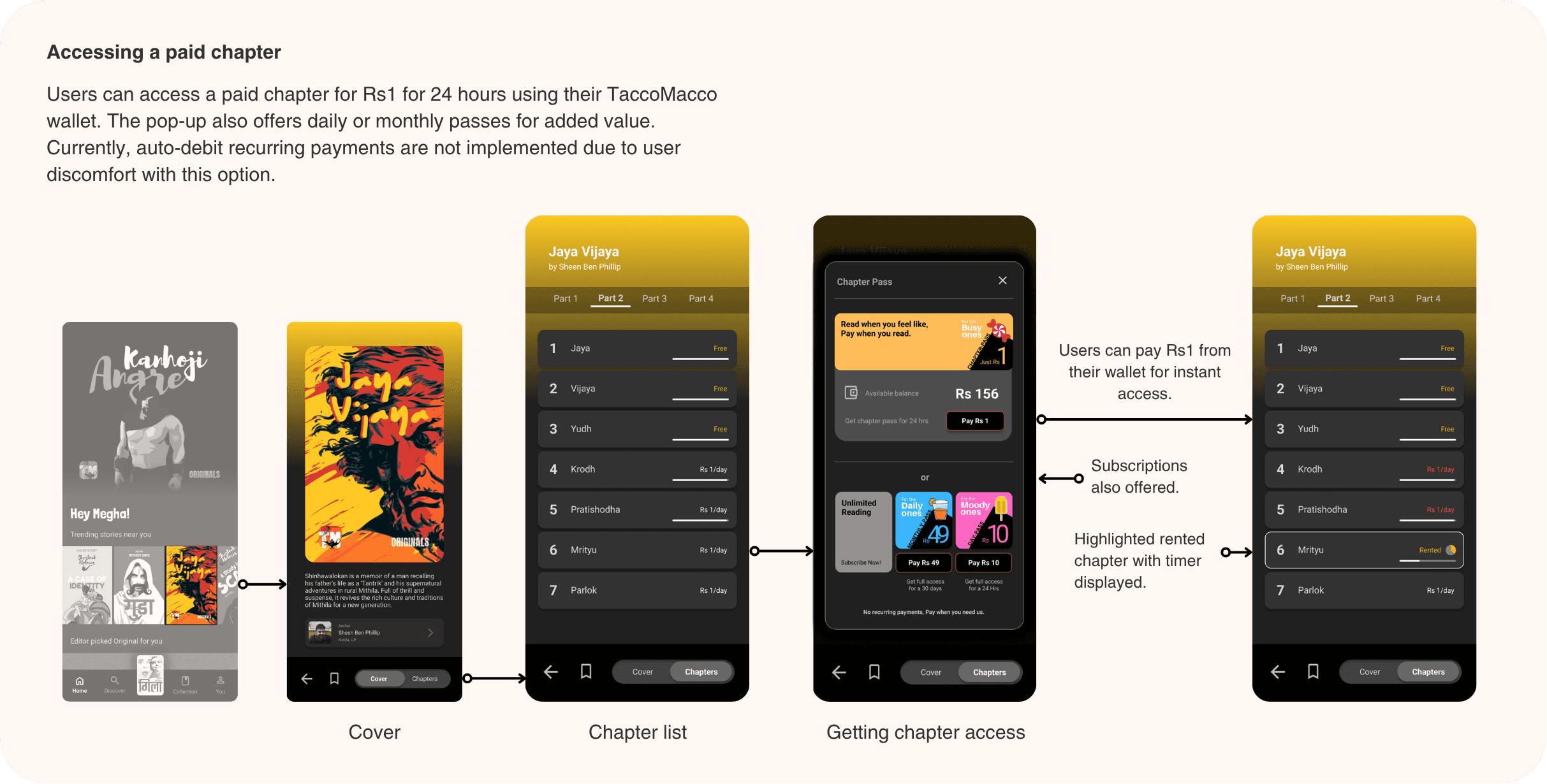
Break books into free-to-start, pay-per-chapter units with ultra-low pricing – so users pay only for what they actually read.
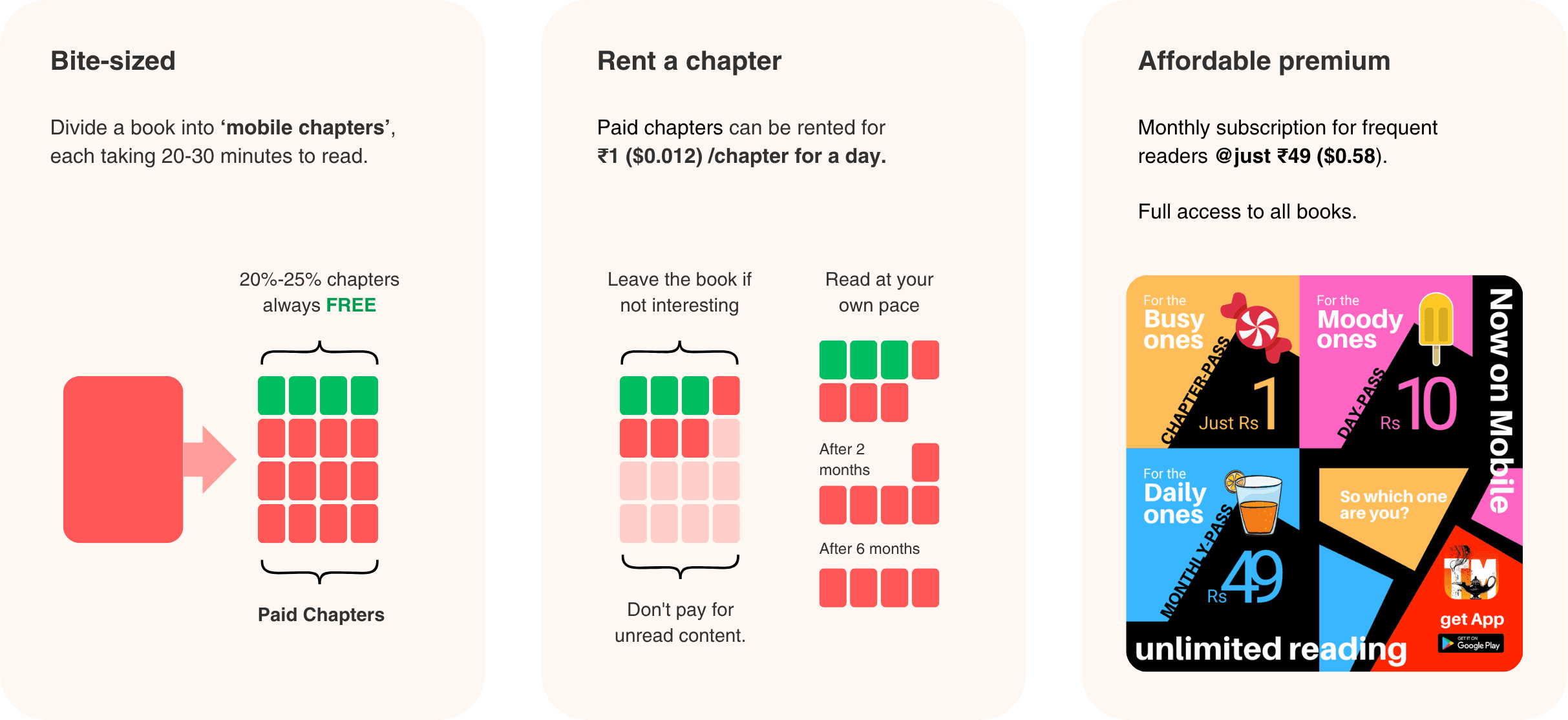
The Challenge
We faced a threefold challenge:
App Design and Development
Curation of Public Domain Content
Attracting New Authors
In this case study, I will primarily focus on app design while also addressing the other two challenges.
I primarily managed overall operations, product design, development processes, and content graphics, while my co-founder handled attracting new authors, editorial tasks, and content curation.
Our initial product vision was ambitious, but we refocused to develop a minimal viable product (MVP) with key features.
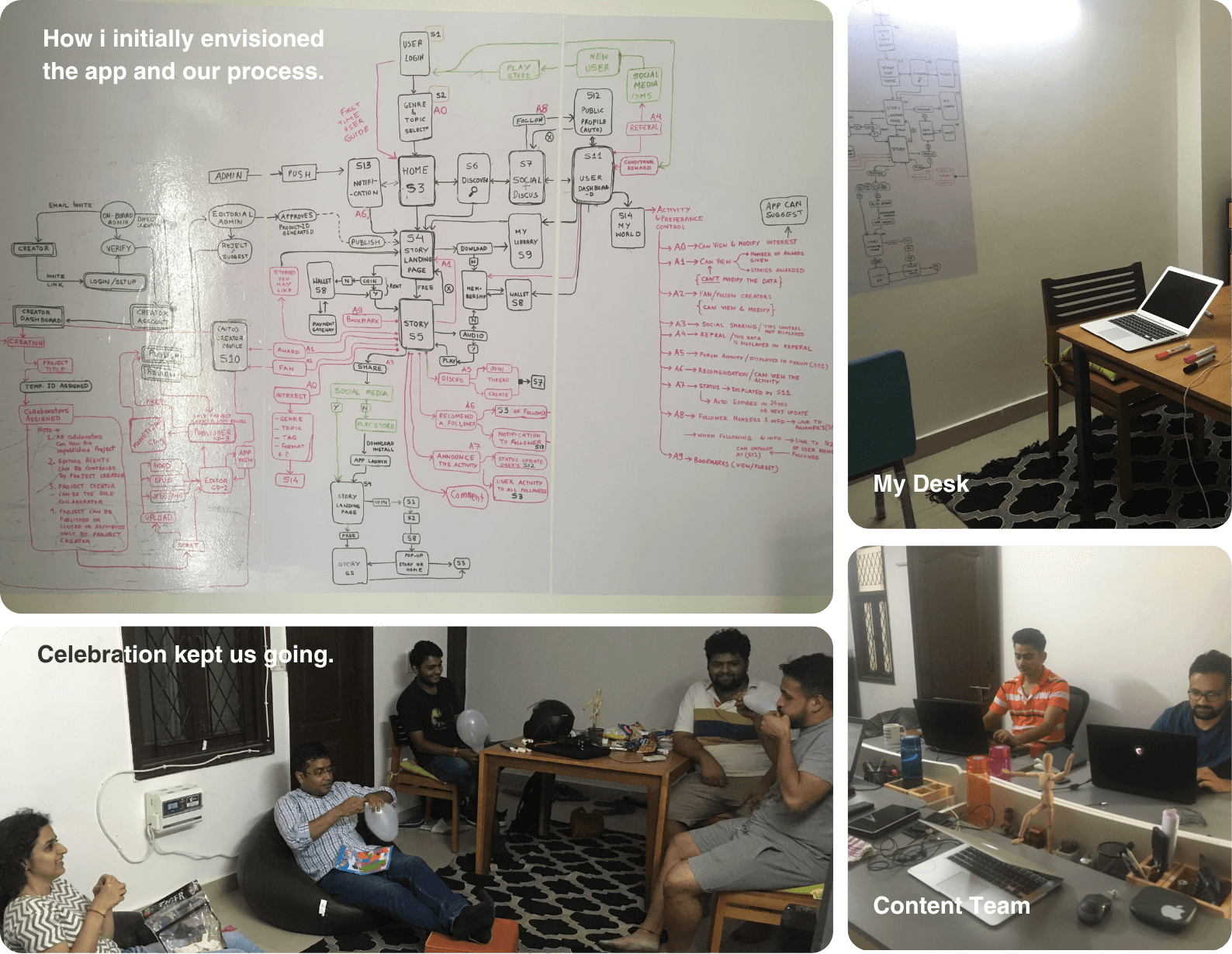
The Mobile App
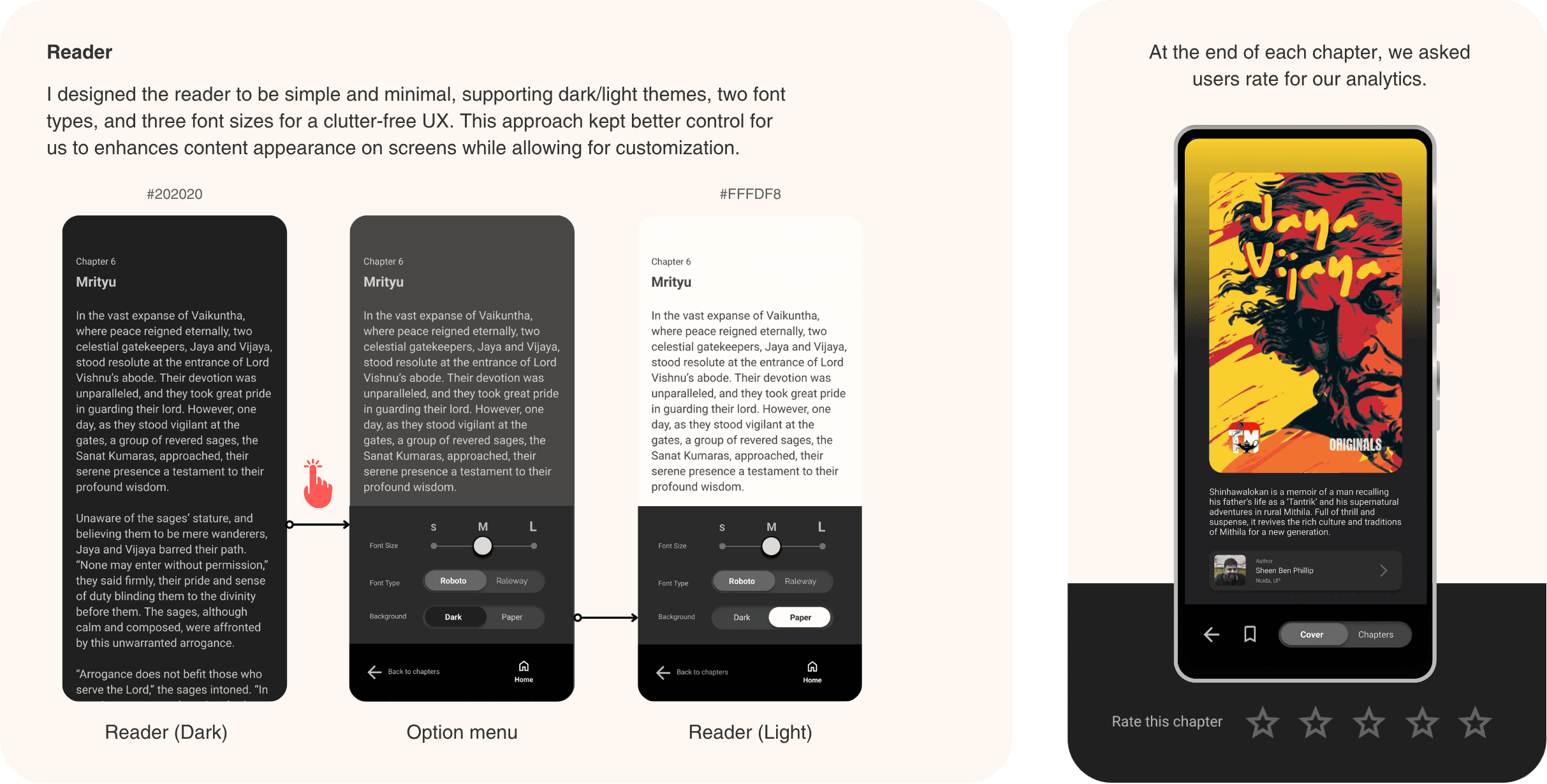
We started our MVP with an android app as our primary target audience and early adopters were mostly on android.
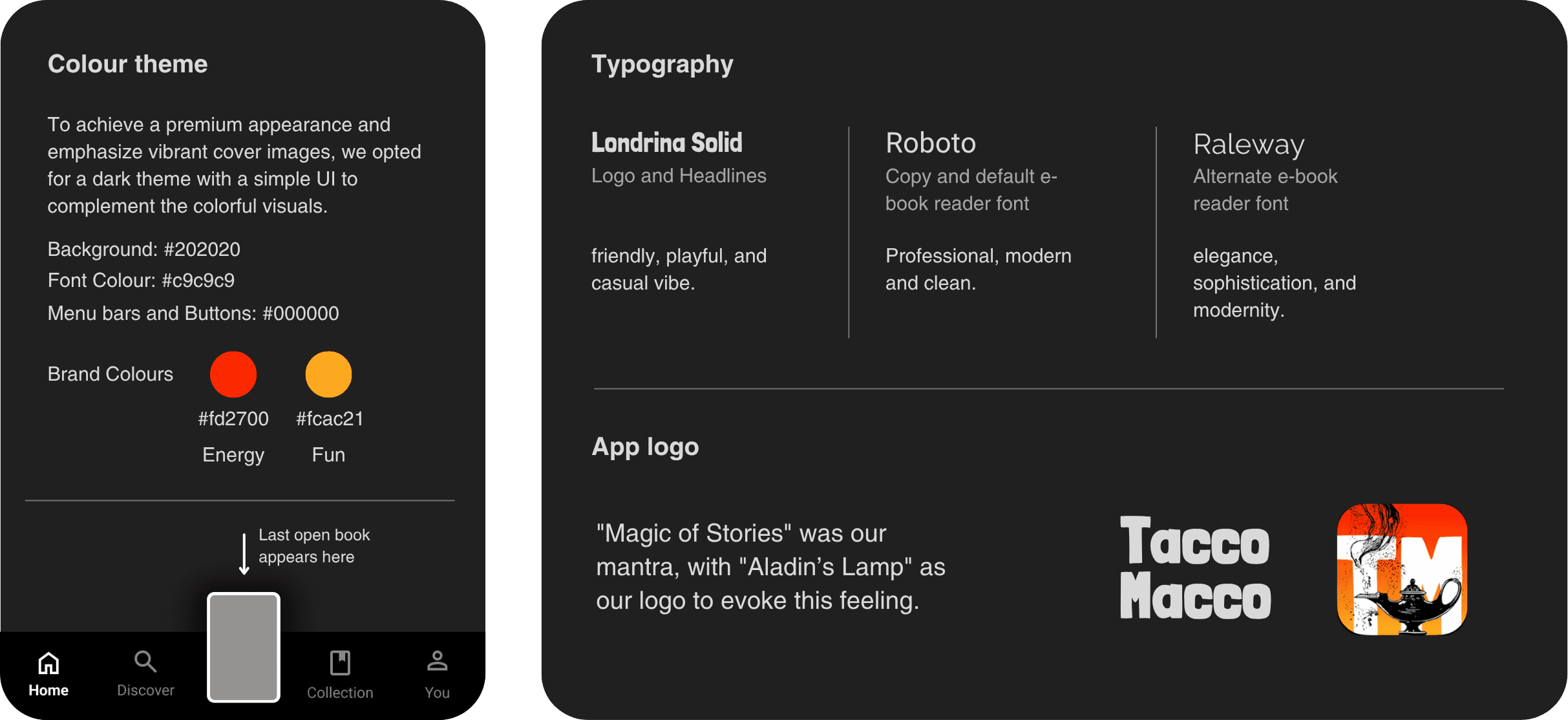
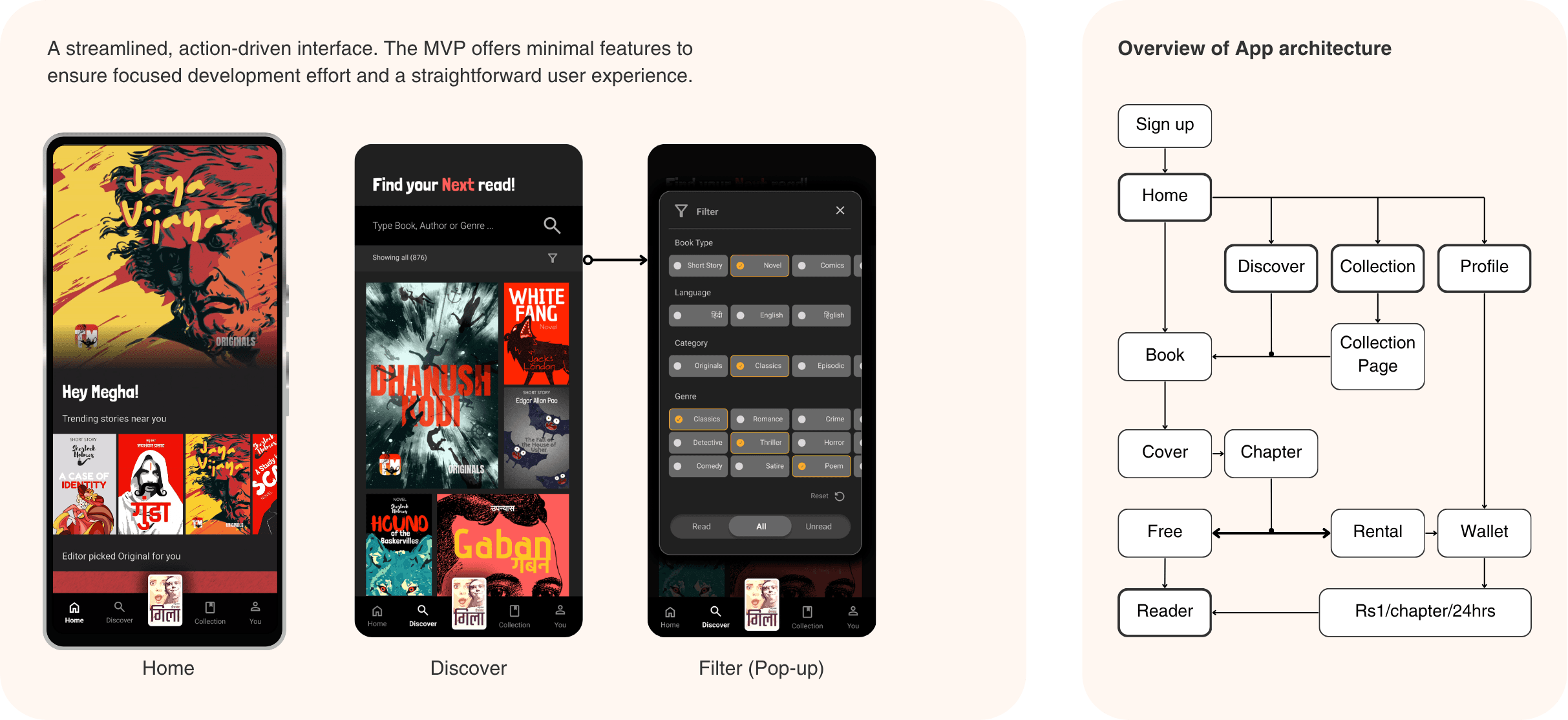
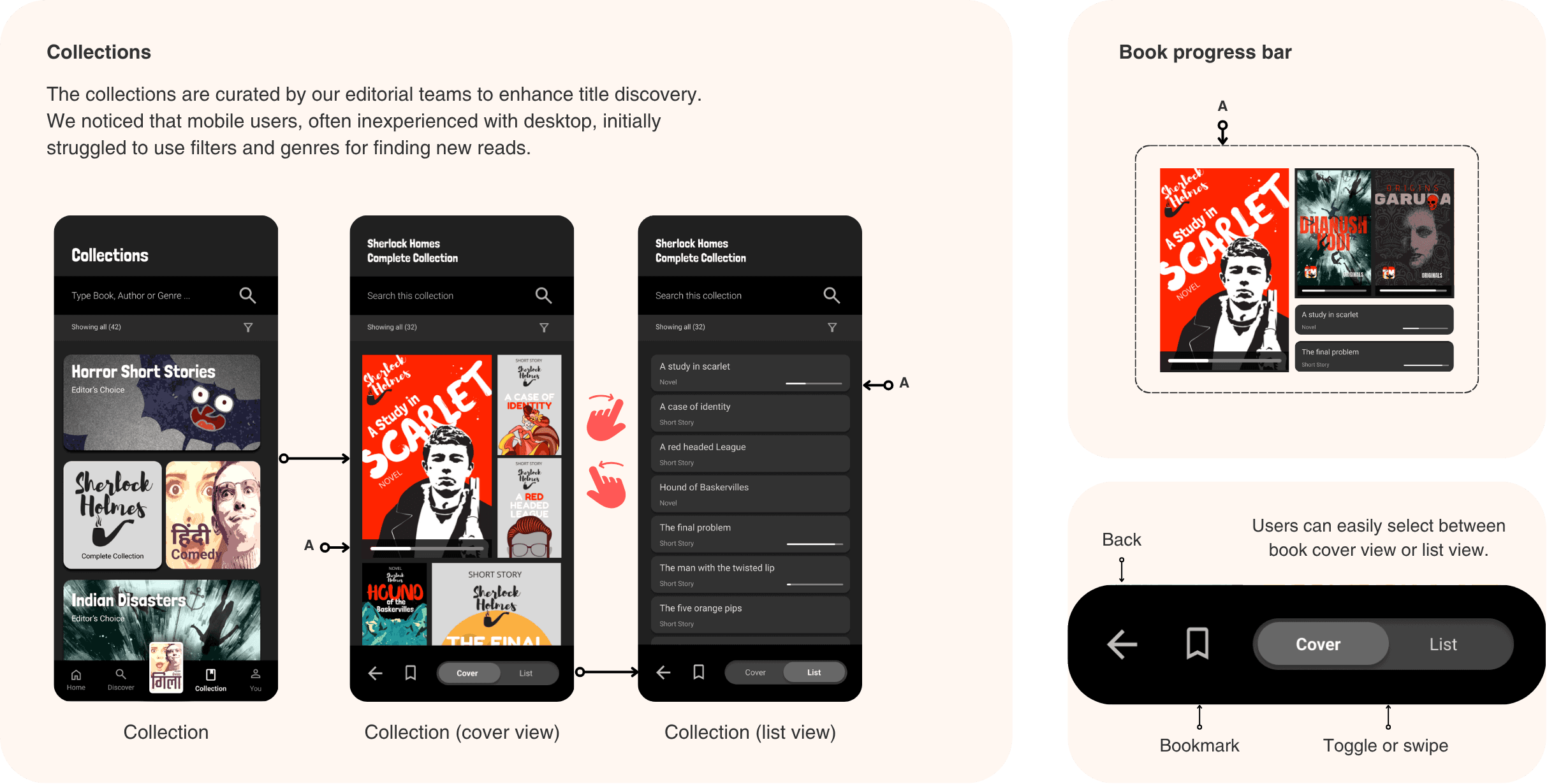
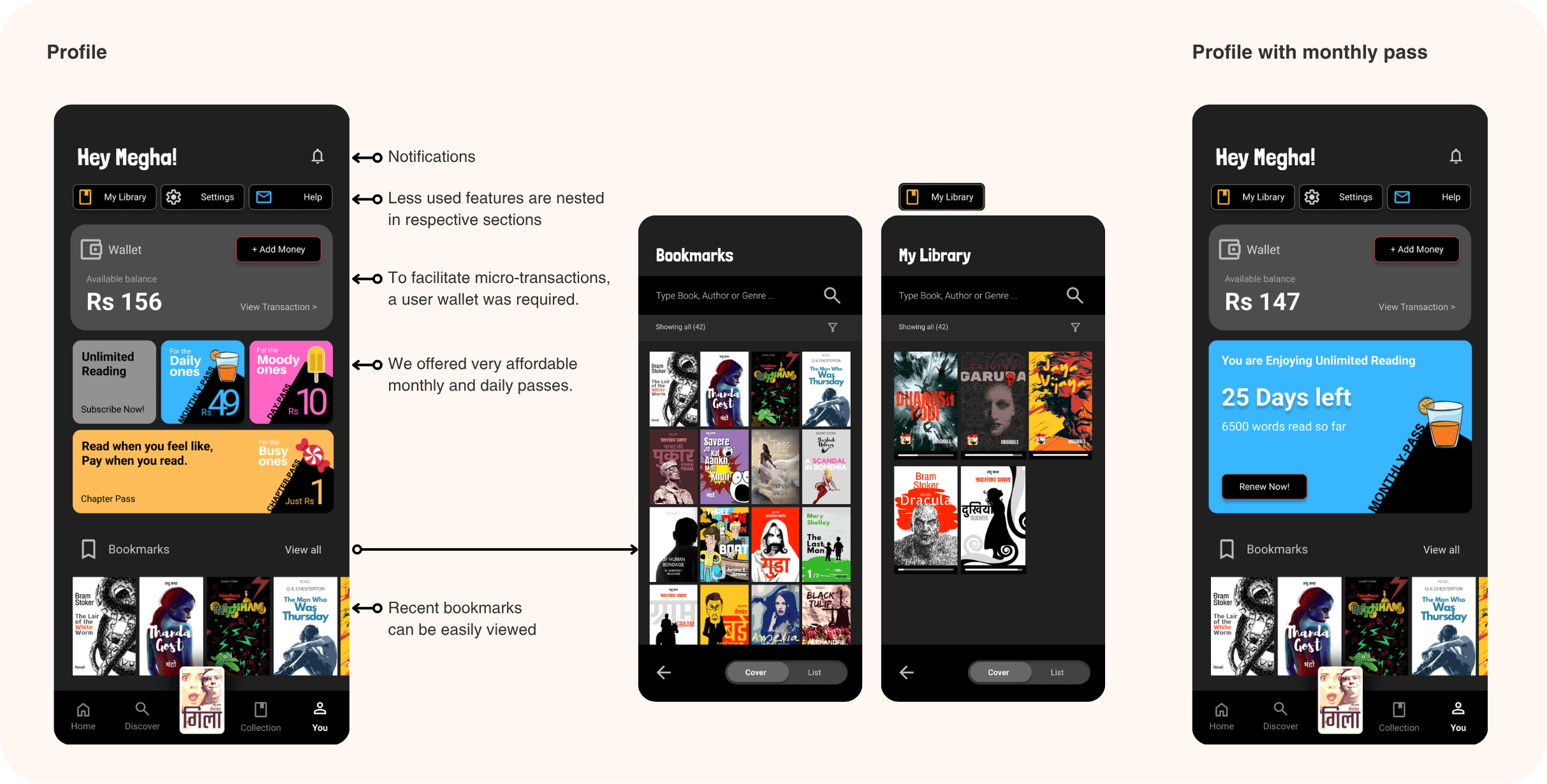
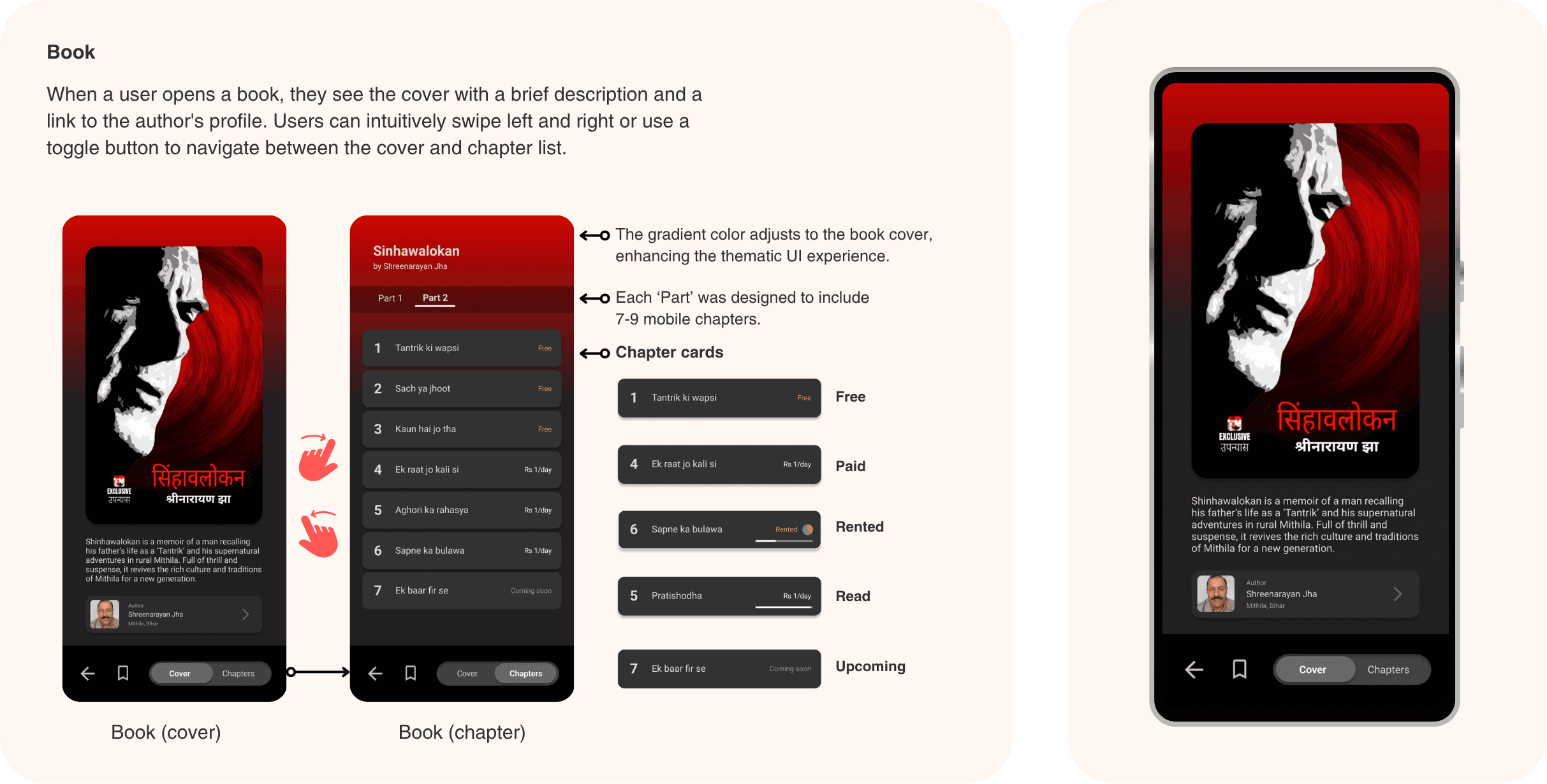
GTM
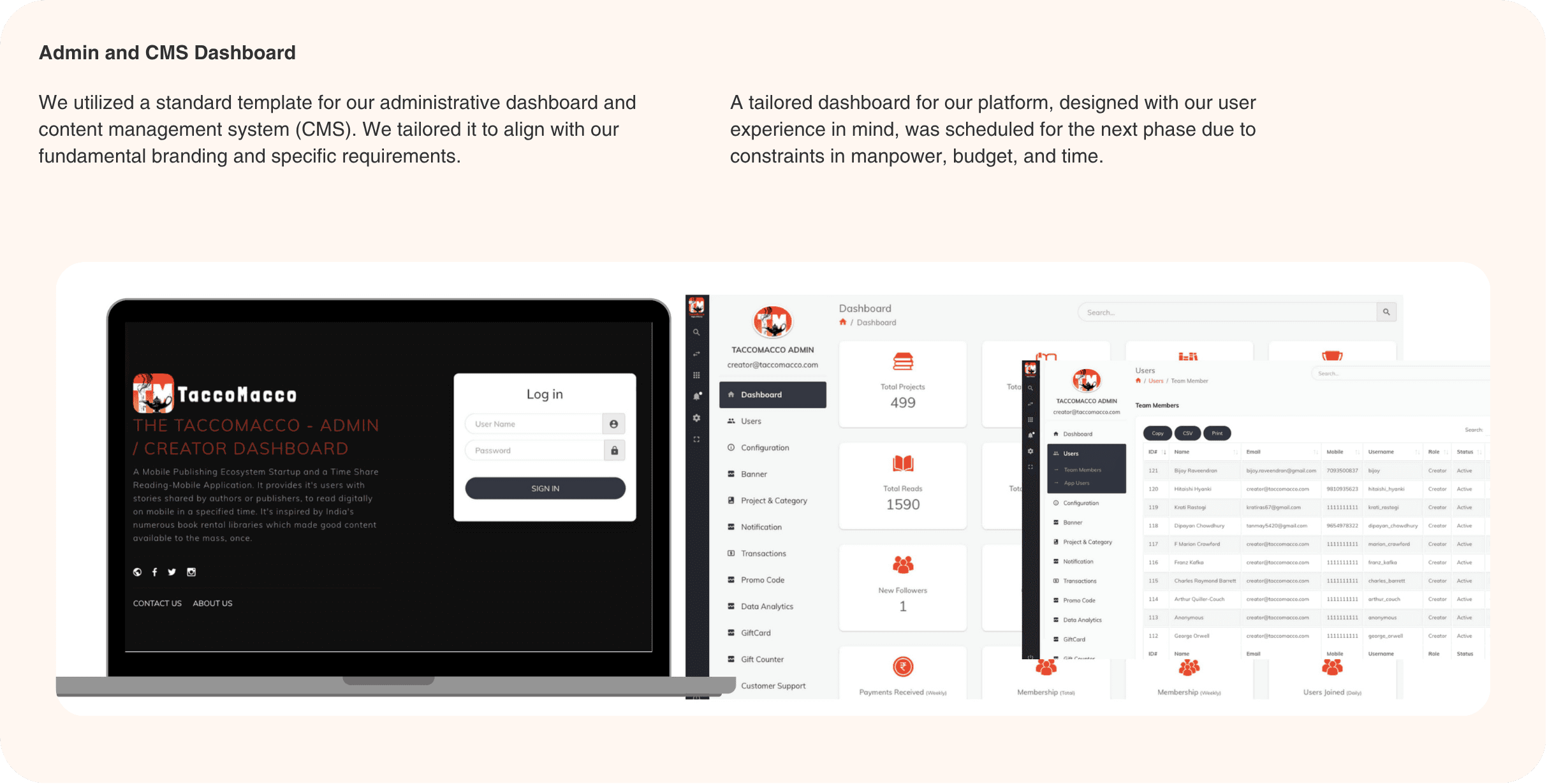
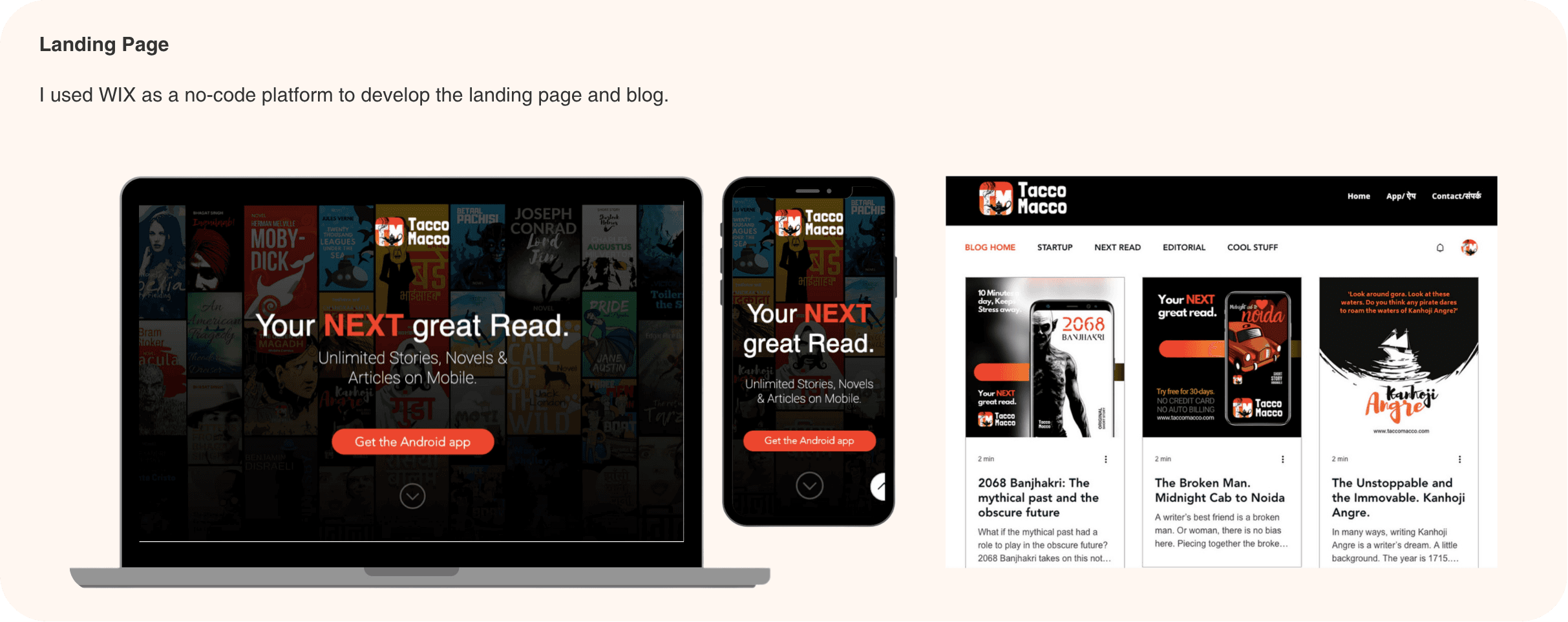
While the content team curated material and managed author programs, I was also handling additional tasks during our app's development and testing. Getting ready to hit the market.
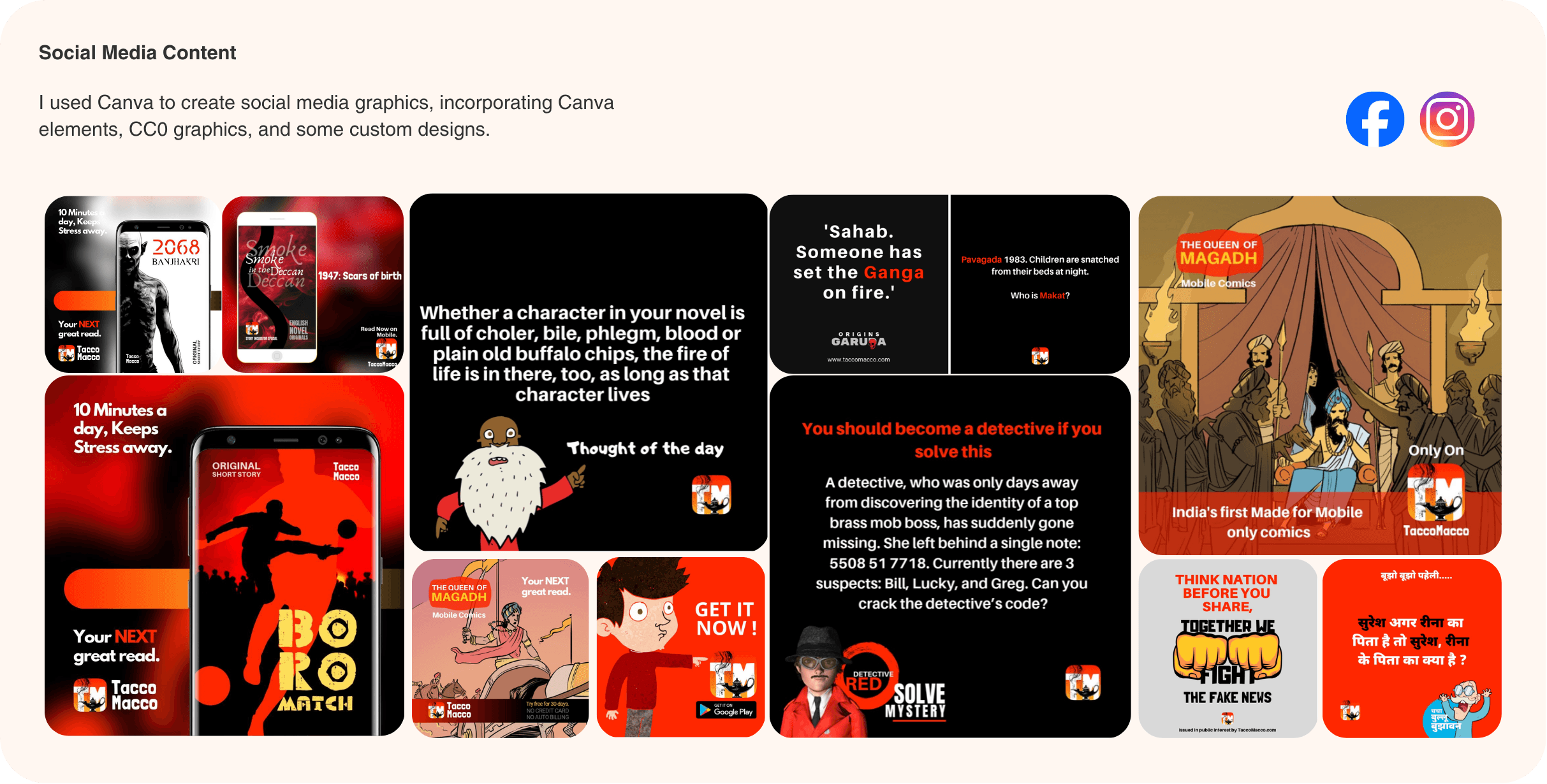
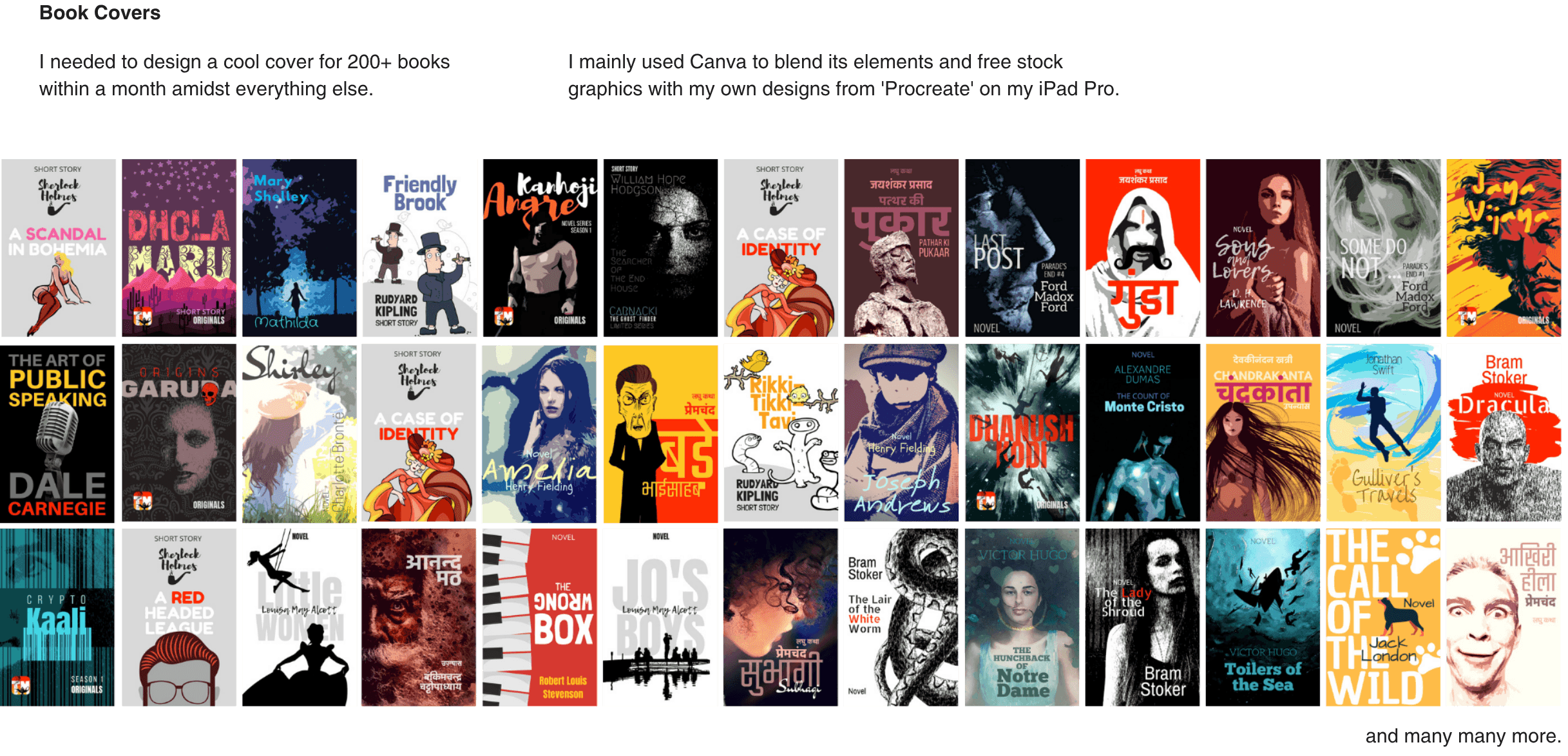
Launch, Early Adopters and Fall
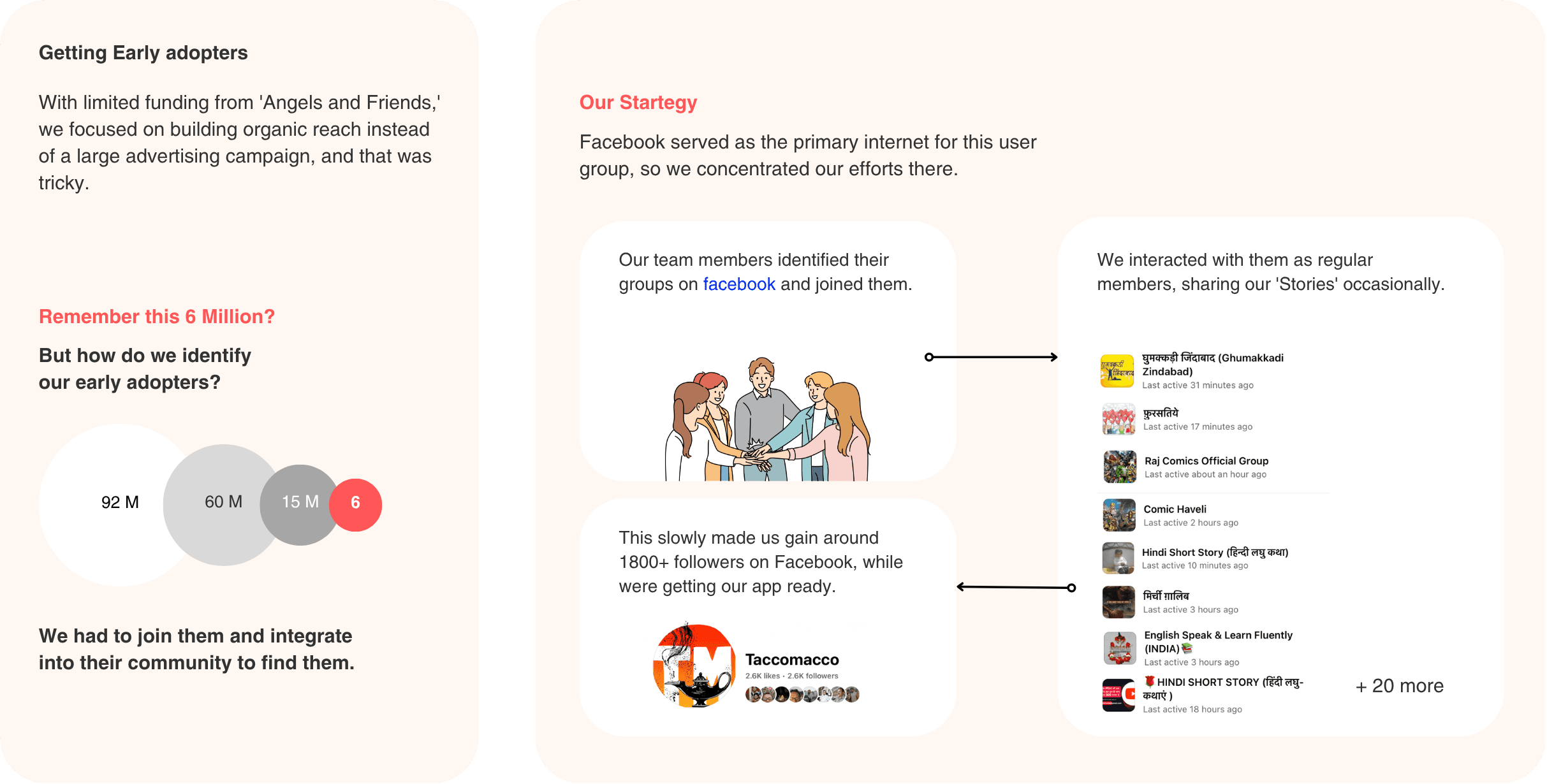
After launch, we attracted early adopters from targeted Facebook groups, gaining over 800+ paying customers in 8 to 9 months, with 60% choosing monthly plans. We also doubled our publications from 200+ to 400+. However, things began to go wrong after that.
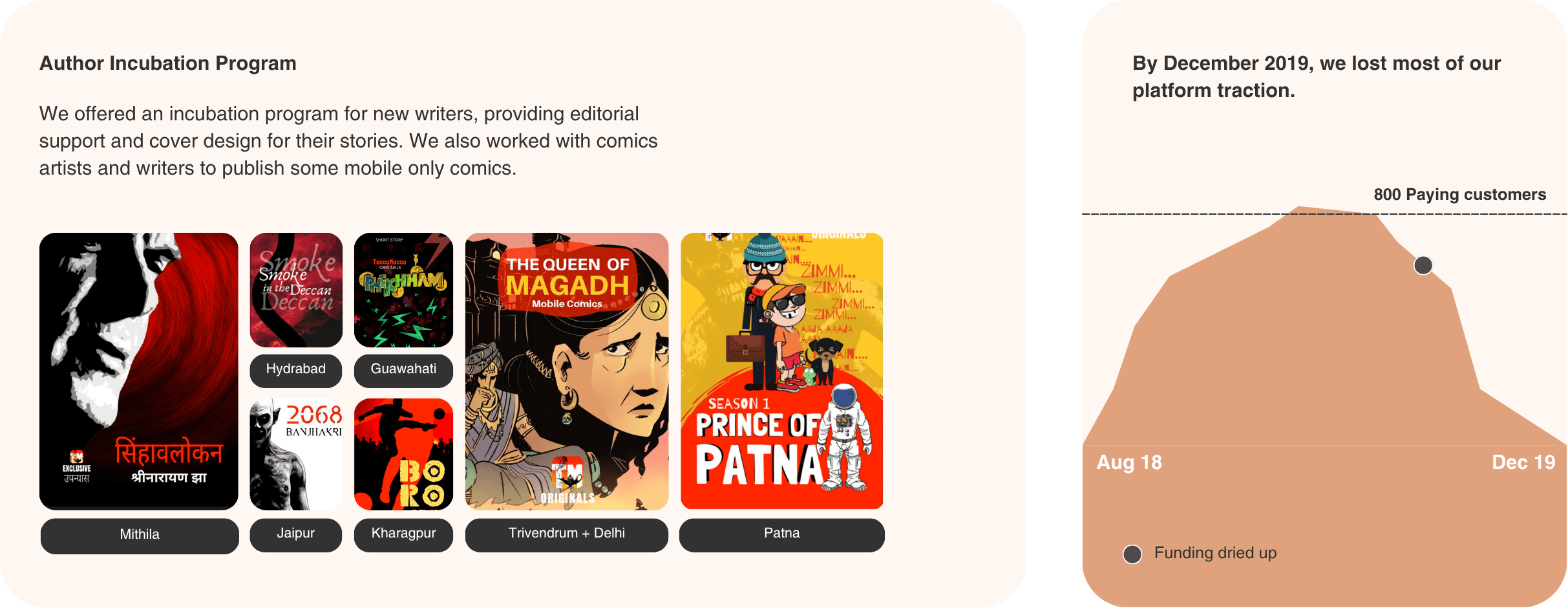
Why we failed
User attention shifted from reading to high-frequency, low-effort formats like short video and audio – capturing time that books once owned.
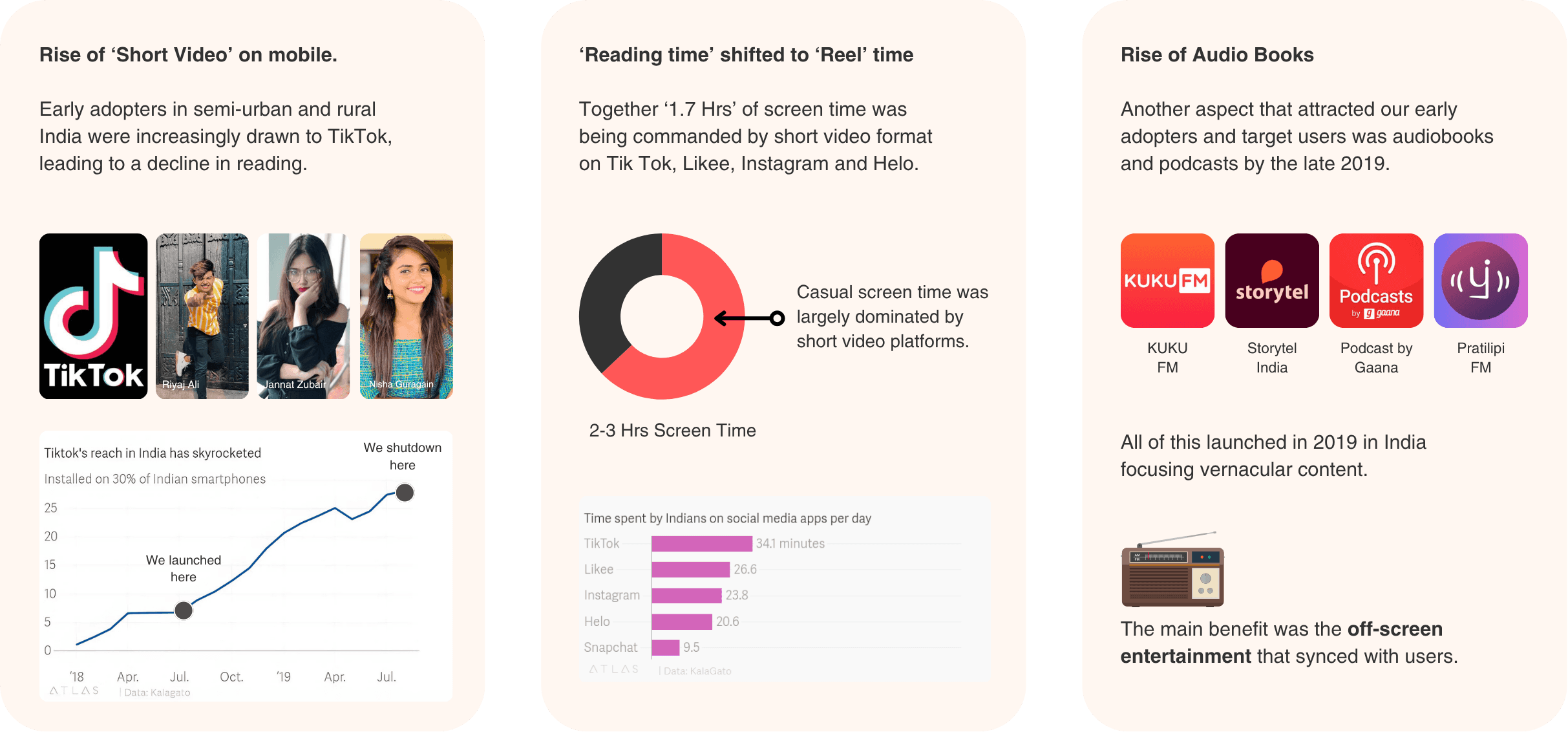
The market wasn’t about reading – it shifted to entertainment-first, UGC-driven consumption, and missing the audio pivot meant losing the moment.
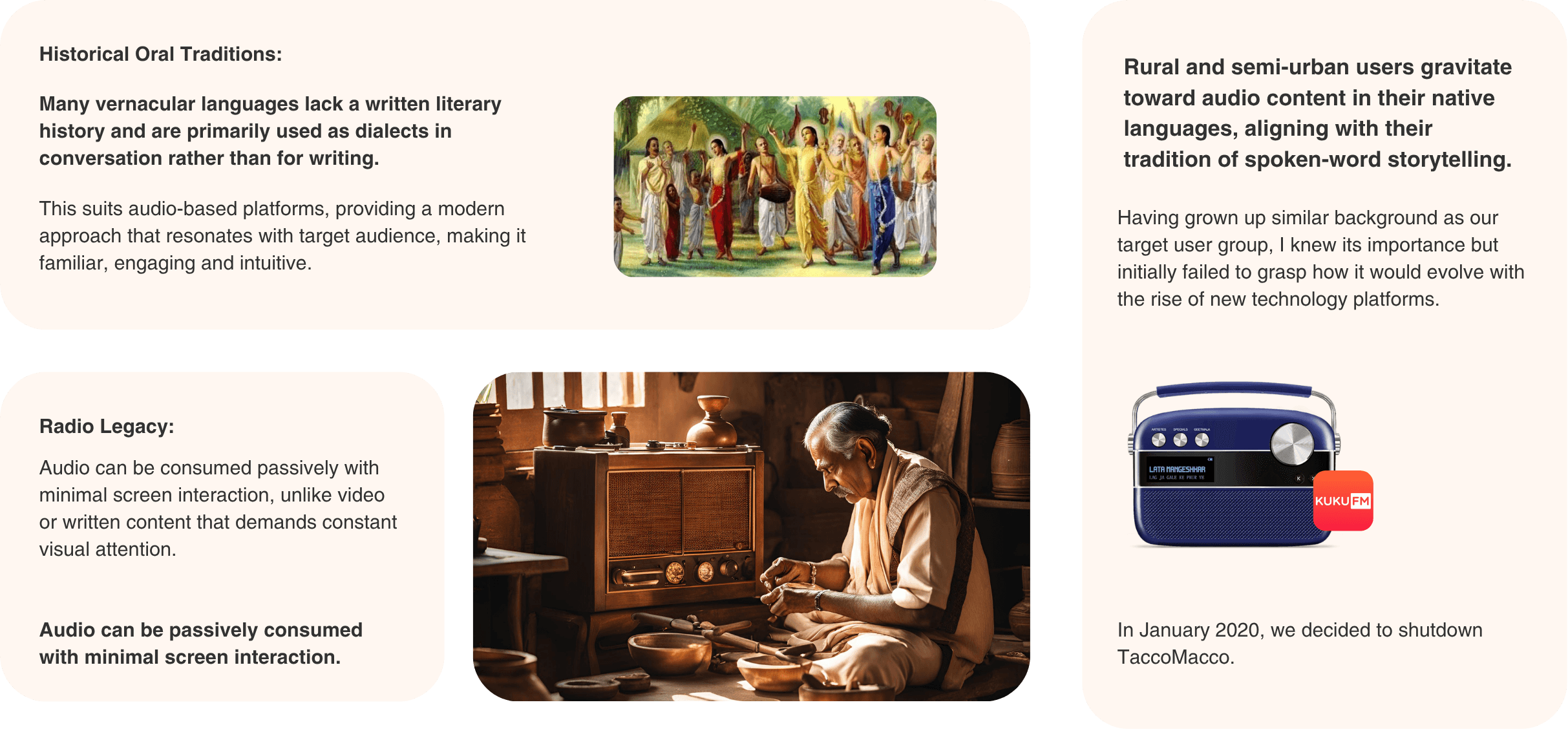
User behavior wasn’t built for reading – it was rooted in oral, passive, vernacular storytelling – making audio the most natural and scalable format.
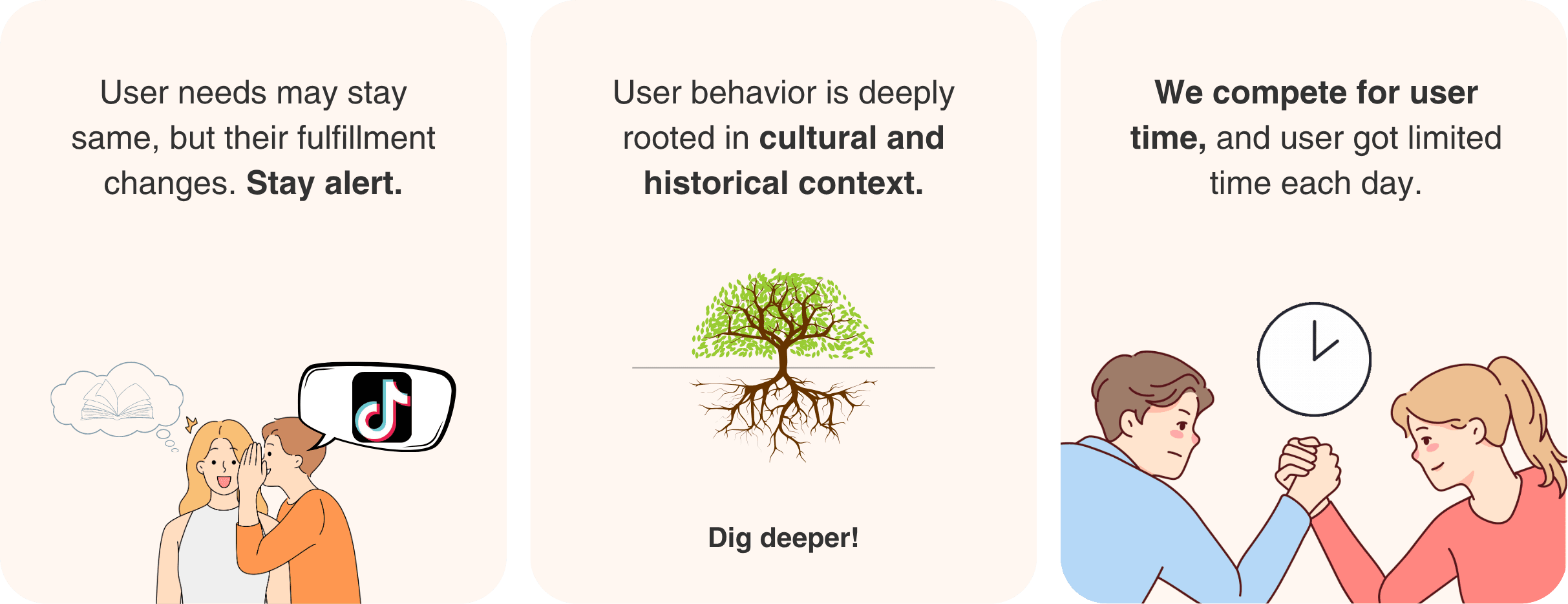
My main insights from this project
User needs may not change – formats do, shaped by culture, and ultimately everything competes for limited attention.
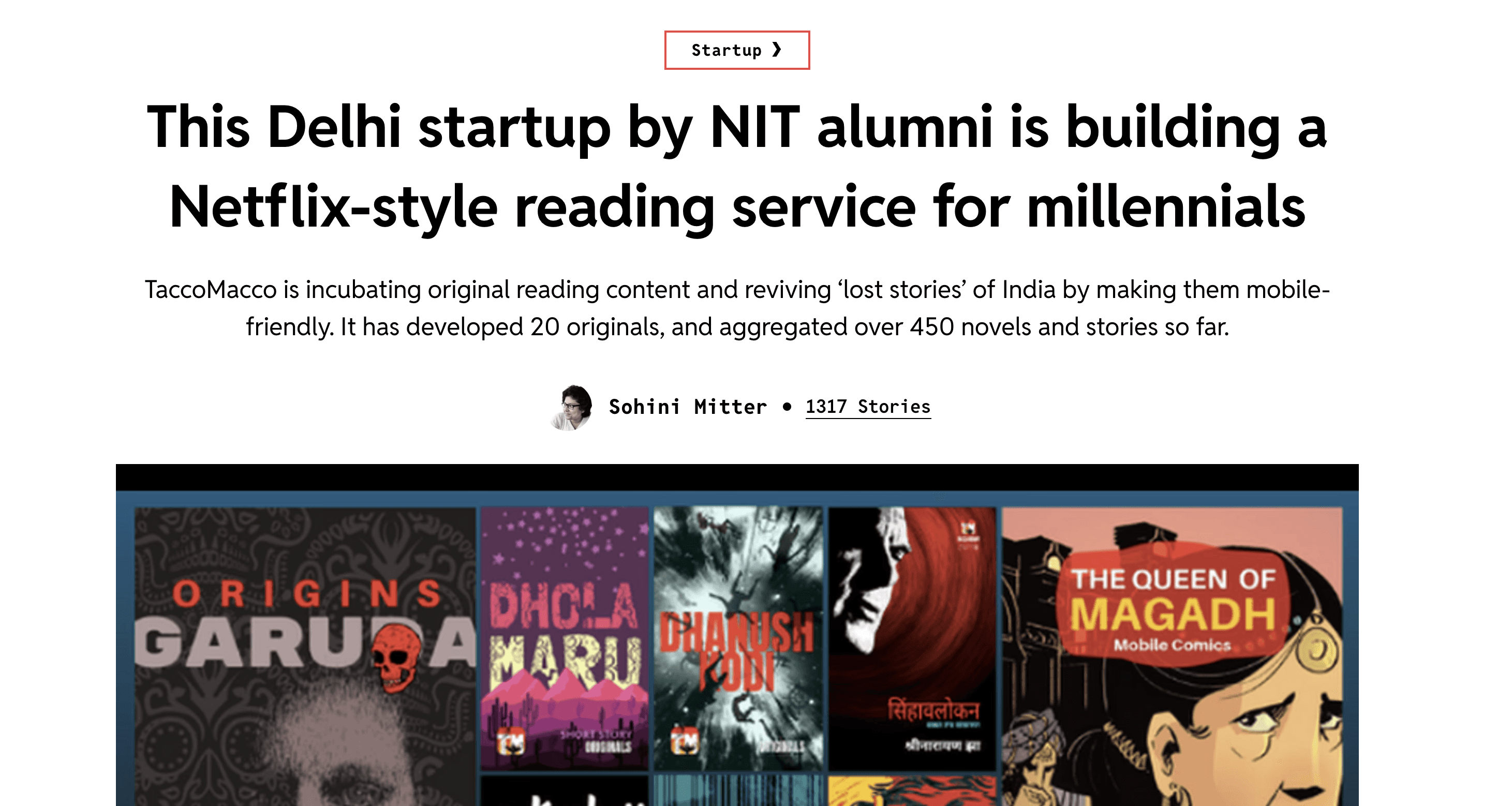
Featured by YOURSTORY
More case studies
Making AI agents easy to build, for anyone
A no-code canvas where non-technical users build, configure, and deploy AI agents.
AI Agents · No-Code
Nagent AI
When more data slows decisions
AI-powered distress detection for school counselors – cutting case review time by 60%.
AI · Edtech · Counselor Dashboard
Palo AI